What Is Alpha-GPC? Benefits, Dosage, Side Effects and How It Works
Alpha-GPC is a choline compound used to support brain function, memory, and focus by boosting acetylcholine levels. It’s popular in nootropics and sports performance for its potential cognitive and neurological benefits.

What Alpha-GPC Is
Alpha-GPC (alpha-glycerophosphocholine, also called choline alphoscerate) is a choline-containing phospholipid that plays a direct role in brain chemistry. After ingestion, it is rapidly absorbed and can cross the blood–brain barrier, where it breaks down into choline and glycerol-1-phosphate.
Choline is a precursor to acetylcholine, a neurotransmitter involved in memory, attention, and muscle contraction. Glycerol-1-phosphate supports cell membrane structure and repair processes in neurons. [1]
Because of this, Alpha-GPC is widely studied as both a cognitive enhancer and a neuroprotective compound, especially in age-related cognitive decline research. [1]
How Alpha-GPC Works in the Brain
Alpha-GPC primarily supports the cholinergic system by increasing acetylcholine availability in the brain.
Once metabolized, it enhances cholinergic transmission and has been shown to influence multiple neurotransmitter systems beyond acetylcholine, including dopamine and serotonin pathways in certain brain regions. [2]
Research suggests it may:
- Increase acetylcholine production and signaling [2]
- Support dopamine activity linked to motivation and behavior [2]
- Influence serotonin systems involved in mood and anxiety regulation [2]
- Support neuroplasticity and neuronal survival in disease models [2]
Preclinical studies show protective effects against memory impairment, seizure-related brain injury, and cerebrovascular damage. [2]
Human research also suggests potential effects on motivation and cognitive performance in healthy individuals, though results are mixed depending on context and dosage. [2]
Natural Sources vs Supplements
Alpha-GPC is not commonly found in meaningful amounts in standard diets. It is usually obtained through supplementation rather than food.
Because of its structure as a phospholipid derivative, supplementation is the most practical way to achieve levels used in clinical or performance research.
Main Benefits of Alpha-GPC
Cognitive Function and Memory
Alpha-GPC is most studied for its role in memory support and cognitive decline. Clinical research in dementia populations shows improvements in cognitive function and daily functioning compared with other choline-based treatments. [6]
Focus and Attention
By increasing acetylcholine availability, Alpha-GPC may support attention and mental clarity, particularly in states of cognitive fatigue or aging-related decline. [2]
Physical Performance
Some research suggests acute supplementation may support:
- Higher peak power output
- Improved jump performance
- Faster speed/agility in certain tests
However, results are inconsistent, and many studies show no statistically significant changes in cognition or mood during acute use. [3]
Neuroprotection
Animal and clinical research suggests potential protective effects on neurons, including reduced damage in models of stroke, seizures, and cognitive impairment. [2]
How Fast It Works and What It Feels Like
Alpha-GPC is rapidly absorbed and crosses into the brain efficiently, but human performance effects vary widely.
In acute studies:
- Some improvements in power output were observed (e.g., ~7–8% increases in vertical jump peak power in certain groups) [3]
- Speed/agility improvements were modest in some cases
- Cognitive and mood effects were inconsistent across participants [3]
A major finding across trials is variability — some individuals respond strongly, while others show no measurable change. [3]
Dosage Guidelines
Research commonly uses a range depending on goal:
- Cognitive support: typically lower daily doses used in clinical studies
- Performance use: often taken acutely before training sessions
Longer-term supplementation is still being studied, especially for optimal dosing consistency and bioavailability. [3]
Stack Combinations
With Caffeine
Some studies show small performance effects, but also increased jitteriness in caffeine groups compared with Alpha-GPC alone. [3]
With Racetams / Choline Stacks
Animal studies suggest combining cholinergic compounds may enhance memory-related pathways, though results are complex and not always additive. [4]
With Creatine / Nootropics
Creatine supplementation independently shows moderate improvements in memory and attention in meta-analyses, suggesting potential synergy in broader cognitive stacks. [5]
Side Effects and Safety
Alpha-GPC is generally considered safe in human use.
- Well tolerated at doses up to 1.2 g/day for several months without serious adverse effects reported [7]
- Occasional side effects may include headaches or fatigue
- Rare cases of brain fog or paradoxical cognitive effects
Toxicity risk appears low in both human and animal data. [7]
Who Might Benefit Most
- Students under cognitive load
- Athletes focused on explosive performance
- Older adults experiencing cognitive decline
- Individuals exploring cholinergic-based nootropic stacks
Who Should Be Cautious
- People sensitive to cholinergic supplements
- Those prone to headaches from acetylcholine increases
- Anyone combining multiple cholinergic agents without monitoring response
Alpha-GPC vs CDP-Choline
In clinical comparisons involving dementia patients, Alpha-GPC showed stronger improvements in overall clinical outcomes compared to citicoline in some measures. [6]
However:
- Memory and word fluency improvements were similar between both compounds
- Both were generally well tolerated
- Differences depend heavily on outcome measure and population studied [6]
Research Overview
What looks solid:
- Increases acetylcholine availability [1,2]
- Potential benefits in cognitive decline populations [6]
- Some support for neuromuscular performance effects [3]
- Good safety profile in human studies [7]
What is still uncertain:
- Consistent cognitive enhancement in healthy users [3]
- Optimal dosing protocols
- Long-term effects in healthy populations
- Reliability of performance benefits across individuals [3]
Practical Takeaways
Alpha-GPC is best understood as a choline-based compound with strong biological plausibility but mixed real-world performance effects depending on the person and context.
It tends to show its clearest effects in:
- Clinical cognitive decline settings
- Cholinergic support contexts
- Select athletic performance scenarios
In healthy users, results are more variable than marketing claims suggest.
Frequently asked questions
- What is Alpha-GPC?
Alpha-GPC (alpha-glycerophosphocholine, also called choline alphoscerate) is a choline-containing phospholipid. After ingestion, it is rapidly absorbed and crosses the blood–brain barrier, where it breaks down into choline and glycerol-1-phosphate. Choline is used to produce acetylcholine, a neurotransmitter tied to memory, attention, and muscle contraction. [1]
- How does Alpha-GPC work in the brain?
It works mainly by increasing acetylcholine levels in the brain, strengthening cholinergic signaling. [2]
Beyond that core pathway, research shows it may also:
- Influence dopamine systems linked to motivation and behavior
- Affect serotonin systems involved in mood and anxiety
- Support neuroplasticity and neuron survival in experimental models [2]
- What is Alpha-GPC used for?
It’s mainly studied for:
- Does Alpha-GPC improve memory and focus?
Evidence is mixed.
- In clinical dementia research, it shows improvements in cognitive function and daily functioning compared with some alternatives. [6]
- In healthy individuals, effects on cognition and mood are inconsistent. Some studies show no clear cognitive boost. [3]
So it appears more reliable in clinical impairment than in already-healthy users.
- Can Alpha-GPC help with learning and cognitive performance?
Possibly, but not reliably in all populations.
It supports acetylcholine production, which is important for learning and memory processes. [2]
However, human studies show high variability in real-world cognitive performance outcomes. [3]- Is Alpha-GPC good for workouts and athletic performance?
Some evidence suggests modest performance benefits:
- Faster speed/agility in certain tests
- Higher vertical jump peak power in some groups (~7–8% in some measures) [3]
But:
- Other studies show no significant improvements in mood, cognition, or physiological performance
- Results vary widely between individuals [3]
- How quickly does Alpha-GPC start working?
It is rapidly absorbed and reaches the brain efficiently. [1]
In acute studies, performance effects (when they occur) are typically measured shortly after dosing, but response is inconsistent across participants. [3]
- How long do the effects of Alpha-GPC last?
Duration depends on use case.
- Acute effects in performance studies are short-term
- Cognitive benefits (when present in clinical populations) are associated with longer-term use patterns in studies rather than single doses [3][6]
There is no single fixed duration due to variability in response.
- What is the recommended dosage of Alpha-GPC?
Common research ranges vary depending on goal:
- Cognitive support: used in daily supplementation studies
- Performance use: acute dosing before activity in some trials [3]
Long-term optimal dosing is not fully established, and research continues to refine this. [3]
- When is the best time to take Alpha-GPC?
Depends on intent:
- Cognitive support: typically used daily
- Athletic performance: often taken before training or testing sessions in studies [3]
- Can Alpha-GPC be stacked with caffeine or other nootropics?
Yes, but effects are mixed.
- Some studies show small performance effects when combined with caffeine
- Caffeine groups reported higher jitteriness compared with Alpha-GPC alone in some measures [3]
With other cholinergic compounds:
- Combinations may influence memory pathways, but effects are complex and not always additive (animal data). [4]
- What are the side effects of Alpha-GPC?
It is generally well tolerated.
Possible effects include:
- Headaches
- Fatigue or mild brain fog in some users
- Occasional paradoxical cognitive effects
Overall toxicity risk appears low in human data. [7]
- Is Alpha-GPC safe for long-term use?
Human research suggests:
- Up to 1.2 g/day for 6 months showed no serious adverse effects reported [7]
Long-term effects beyond studied periods are still being researched.
- Who should take Alpha-GPC?
It may be most relevant for:
- Who should avoid Alpha-GPC?
Caution is advised for:
- People sensitive to cholinergic compounds
- Individuals prone to headaches from acetylcholine increases
- Users combining multiple cholinergic supplements without monitoring response
- What’s the difference between Alpha-GPC and CDP-Choline?
In clinical comparisons in dementia patients:
- Alpha-GPC showed stronger overall clinical improvements in some outcomes
- Both compounds showed similar results for memory and word fluency
- Both were generally well tolerated [6]
Differences depend heavily on the condition and outcome measured.
- Does Alpha-GPC increase acetylcholine levels?
Yes. It is a precursor to acetylcholine and increases cholinergic transmission in the brain. [1][2]
- Can Alpha-GPC improve brain health or protect against cognitive decline?
Evidence suggests potential benefits in cognitive decline contexts:
- Is Alpha-GPC better than other choline supplements?
Not universally.
- May outperform citicoline in some dementia-related clinical outcomes
- No clear superiority for memory or fluency in all measures
- Effects depend on population and endpoint studied [6]
- Is Alpha-GPC legal and regulated as a supplement?
Yes. Alpha-GPC is widely available as a dietary supplement in many countries and is commonly used in research and sports nutrition contexts. It is not classified as a controlled substance.
Purchase High Quality Alpha-GPC Supplements
Getting a reliable Alpha-GPC supplement is mostly about clean formulation, correct dosing, and transparent testing. Below are three options that are commonly chosen for consistency and quality standards.
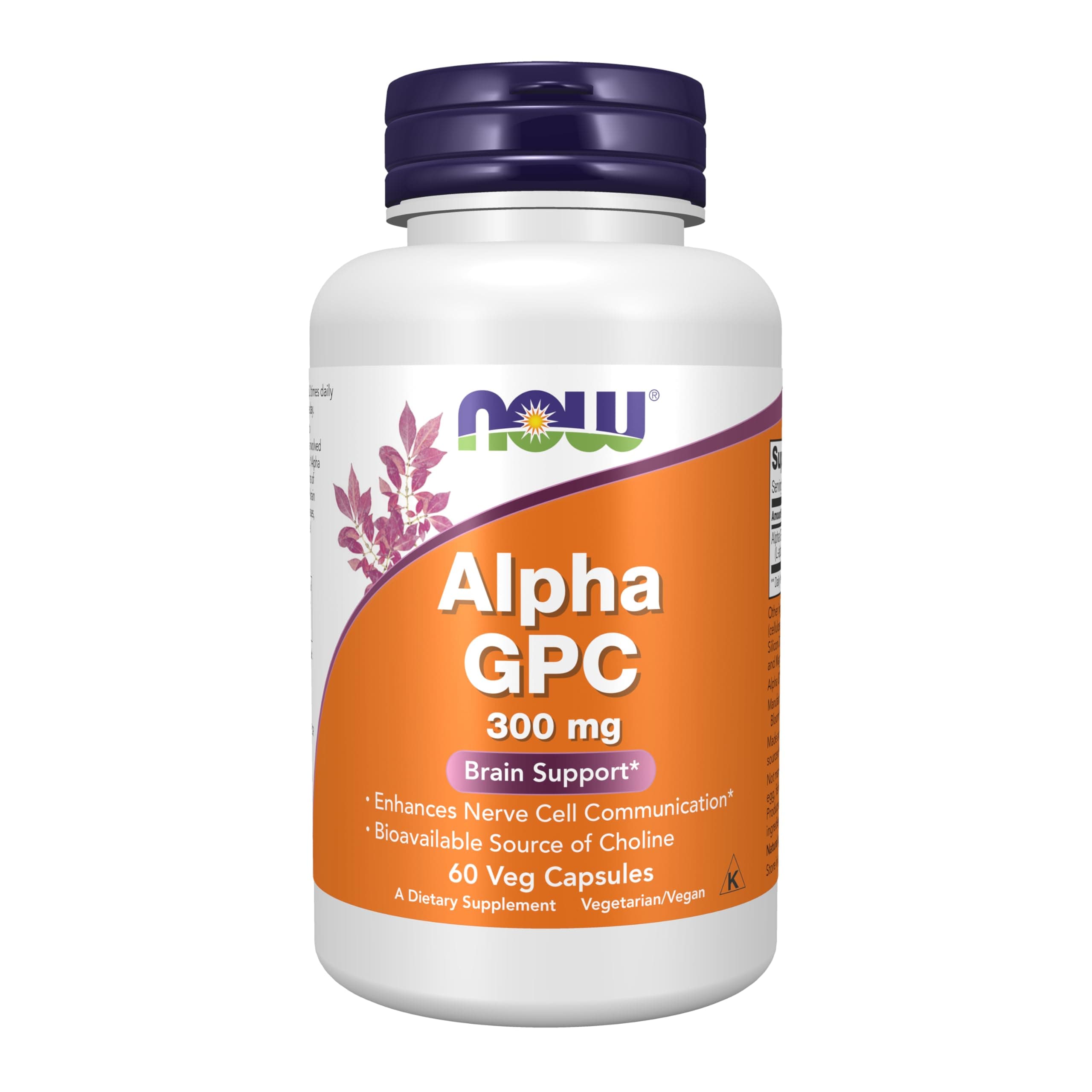
NOW Foods
NOW Alpha GPC 300 mg delivers a bioavailable choline source that supports acetylcholine production for focus, memory, and mental clarity. Often used for cognitive performance and brain health support in daily routines.
View Product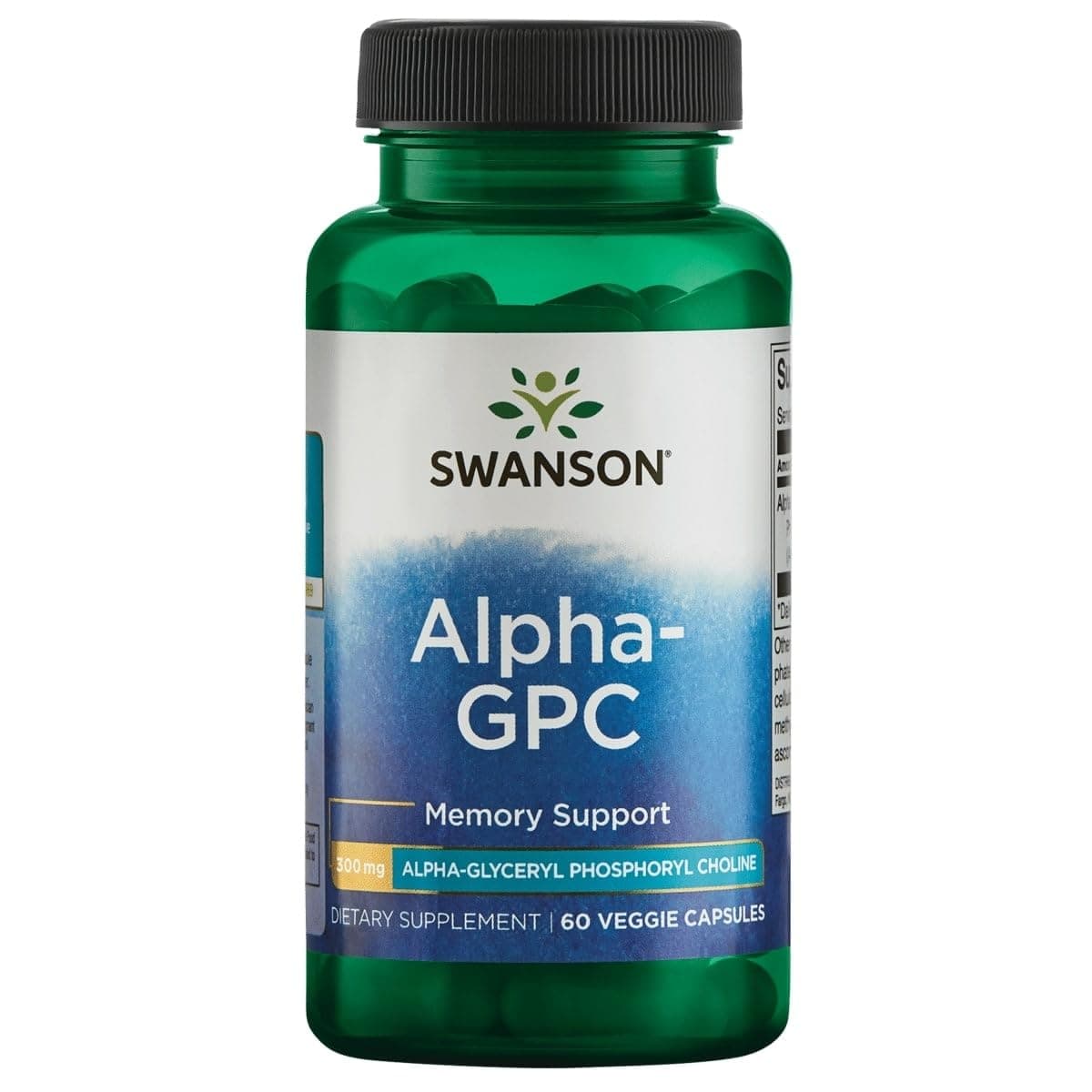
Swanson
Swanson Alpha-GPC 300 mg provides a choline source that supports acetylcholine levels linked to memory, focus, and mental performance. Commonly used for cognitive support and mental energy throughout the day.
View Product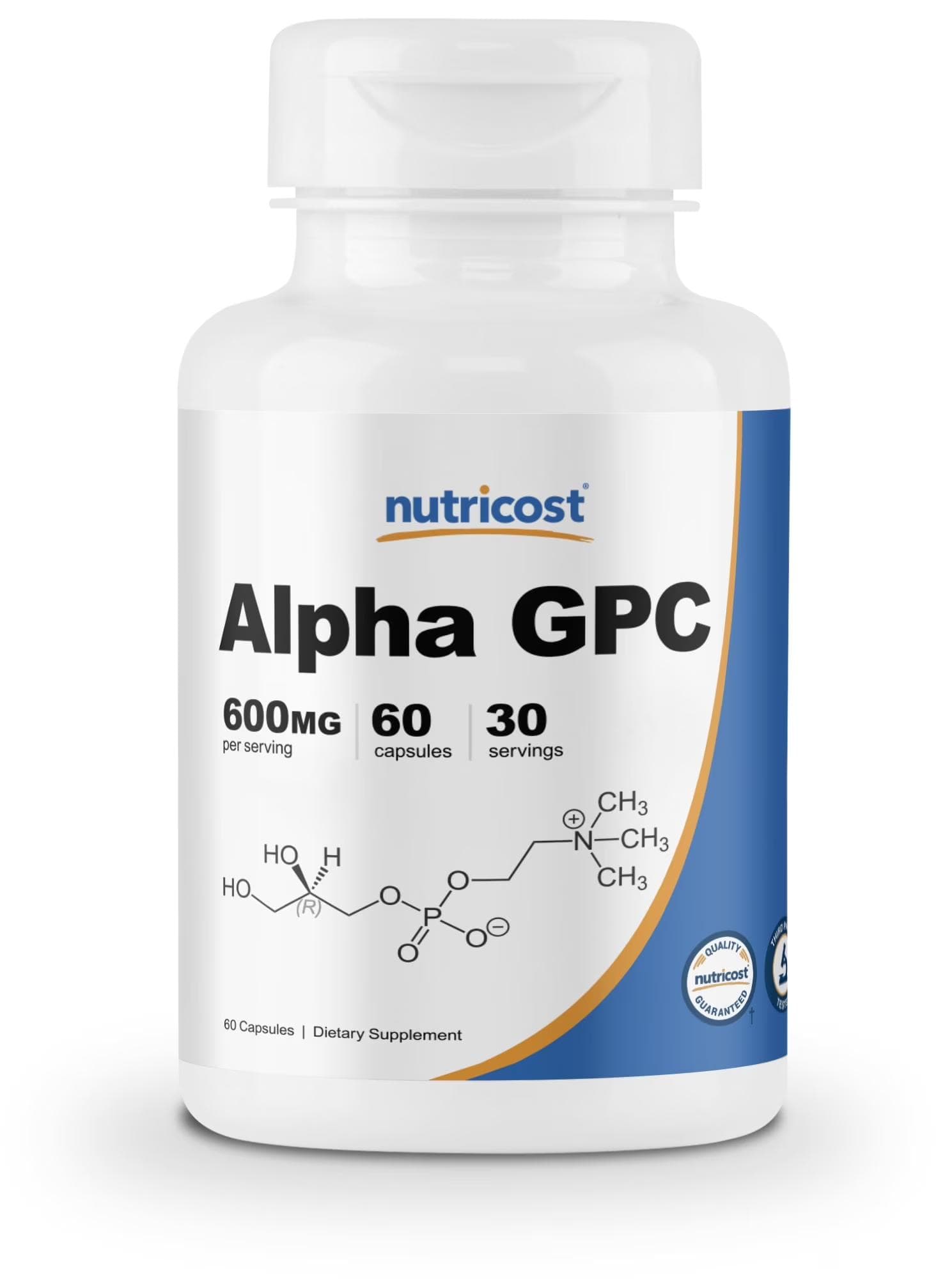
NutriCost
Nutricost Alpha-GPC 600 mg offers a high-potency choline source that supports acetylcholine production for focus, memory, and mental clarity. Popular for cognitive performance and brain health.
View ProductSome links are affiliate links. We may earn a commission at no extra cost to you.
Sources
- 1.Choline alphoscerate (alpha-GPC) and cognition enhancing profile — Traini E, Bramanti V, Amenta F, Current Alzheimer Research, 2013
- 2.Alpha-GPC effects on neurotransmitters and motivation — Tamura Y et al., Nutrients, 2021
- 3.Effects of alpha-GPC on mood, cognition, and performance — Parker AG et al., Journal of the International Society of Sports Nutrition, 2015
- 4.Choline and piracetam effects on memory in aged rats — Bartus RT, Dean RL 3rd, Sherman KA, Friedman E, Beer B, Neurobiology of Aging, 1981
- 5.Creatine supplementation and cognitive function meta-analysis — Xu C, Bi S, Zhang W, Luo L, Frontiers in Nutrition, 2024
- 6.Alpha-GPC vs citicoline in dementia patients — Sagaro GG, Amenta F, Frontiers in Neurology, 2025
- 7.Safety assessment of Alpha-GPC — Brownawell AM, Carmines EL, Montesano F, Food and Chemical Toxicology, 2011
Related articles

Modafinil for Cognitive Enhancement: Benefits, Side Effects, Dosage, Uses, and Safety
Jun 26, 2026 · 15 min read

L-Theanine and Caffeine for Focus: Benefits, Dosage, Side Effects and Research
Jun 22, 2026 · 10 min read

Can Nicotine Boost Your Brain? The Science, Benefits, Risks, and Research Behind Nicotine as a Nootropic
Jun 24, 2026 · 9 min read