L-Theanine and Caffeine for Focus: Benefits, Dosage, Side Effects and Research
Learn how L-theanine and caffeine work together to support focus, attention, and smoother energy while potentially reducing jitters, anxiety, and caffeine-related side effects.
L-Theanine and Caffeine Benefits for Focus, Energy, and Fewer Side Effects
Caffeine is one of the most widely consumed psychoactive substances in the world. In the United States alone, roughly 80–90% of adults consume caffeine daily, whether through coffee, tea, energy drinks, soft drinks, or chocolate.
For many people, caffeine is part of a morning routine. It can improve alertness, reduce feelings of fatigue, and help maintain productivity throughout the day.
The problem is that caffeine doesn't work the same way for everyone.
Some people feel energized and focused after a cup of coffee. Others experience racing thoughts, shaky hands, anxiety, elevated heart rate, and a crash a few hours later.
This is where L-theanine enters the conversation.
L-theanine is a naturally occurring amino acid found primarily in tea leaves. Researchers have spent decades investigating whether combining L-theanine with caffeine can create a smoother, more focused form of stimulation while reducing some of caffeine's less desirable effects.[1]
Interestingly, tea naturally contains both caffeine and L-theanine. Researchers believe this may partly explain why many people describe tea as producing a calmer and smoother form of stimulation than coffee, despite both containing caffeine.
What Is L-Theanine?
L-theanine is a non-protein amino acid naturally present in green tea, black tea, and certain mushroom species.
Unlike stimulants, L-theanine does not appear to increase energy levels directly. Instead, it influences several neurotransmitter systems involved in mood, attention, and relaxation. Research has also linked L-theanine with increased alpha-wave activity in the brain, a pattern often associated with a calm but alert mental state.[2]
Many people describe the feeling as focused relaxation rather than sedation.
One study published in Neurology and Therapy found that a single dose of L-theanine significantly reduced subjective stress in healthy adults while maintaining alertness and cognitive function.[2]
What Is Caffeine?
Caffeine is the world's most widely consumed stimulant and psychoactive substance.[3]
It works primarily by blocking adenosine receptors in the brain. Adenosine is a neurotransmitter that promotes feelings of tiredness. When caffeine blocks its effects, alertness increases and fatigue becomes less noticeable.
Caffeine is naturally found in coffee, tea, cocoa, and various plants, while also being added to energy drinks, pre-workout supplements, and soft drinks.
According to the U.S. Food and Drug Administration (FDA), up to 400 milligrams of caffeine per day appears to be safe for most healthy adults, roughly equivalent to four cups of brewed coffee.[4]
Why Caffeine Can Feel Rough
While caffeine can improve alertness and concentration, it can also push the body toward a heightened state of activation.
The autonomic nervous system is often divided into two branches: the sympathetic nervous system and the parasympathetic nervous system.
The sympathetic nervous system is responsible for the body's "fight-or-flight" response. When activated, heart rate increases, blood pressure rises, and the body becomes more alert and responsive to potential threats. The parasympathetic nervous system acts as a counterbalance, promoting rest, recovery, and relaxation.
Caffeine stimulates the central nervous system and can increase sympathetic nervous system activity. This is one reason many people experience greater energy, motivation, and alertness after consuming coffee or other caffeinated beverages.
At the same time, this heightened state can feel uncomfortable for some individuals. Increased adrenaline release, a faster pulse, elevated blood pressure, and feelings of nervous energy can closely resemble the physical sensations associated with anxiety.
This doesn't mean caffeine causes anxiety in everyone. Many people tolerate it extremely well. However, those who are more sensitive to stimulants often report symptoms such as:
- Jitters
- Restlessness
- Racing thoughts
- Increased heart rate
- Difficulty sleeping
- Anxiety-like feelings
- Energy crashes after the stimulant effects wear off
The higher the caffeine dose, the more noticeable these effects tend to become.
How L-Theanine Changes the Experience
L-theanine appears to affect the nervous system differently from caffeine.
Rather than stimulating the body, research suggests it may promote relaxation while preserving mental alertness.[2]
This makes it particularly interesting when paired with caffeine.
Several researchers have proposed that L-theanine may help counterbalance some of caffeine's overstimulating effects while allowing users to maintain the benefits of improved focus and wakefulness.
A randomized controlled trial published in the Journal of Physiological Anthropology found that L-theanine reduced tension and anxiety scores following stressful mental tasks while also attenuating blood pressure increases in stress-responsive individuals.[5]
Researchers believe this calming effect may be one reason many people report feeling more balanced when combining L-theanine with caffeine.
Benefits of Combining L-Theanine and Caffeine
The combination of L-theanine and caffeine has become increasingly popular among students, professionals, and people who want the productivity benefits of caffeine without feeling overstimulated.
Research suggests several potential benefits.
Improved Attention and Focus
Multiple studies have reported improvements in attention, reaction time, and cognitive performance when L-theanine and caffeine are consumed together.[6][8][9][10][11][13]
Researchers believe the combination may help individuals stay focused on tasks for longer periods while reducing mental distractions and mind wandering.
Smoother Energy
Many users report that combining L-theanine with caffeine creates a steadier feeling of energy compared with caffeine alone.
Rather than a sharp spike in stimulation, the experience is often described as more balanced and controlled, without the same intensity that some people experience after drinking coffee by itself.
Reduced Anxiety and Jitters
Evidence suggests L-theanine may help reduce some of the nervousness or tension associated with caffeine consumption.[5][14]
This may be particularly valuable for people who enjoy coffee but dislike feeling overstimulated.
Better Sleep Outcomes Than Caffeine Alone
Some research suggests L-theanine may reduce certain sleep-disrupting effects of caffeine when both are consumed together.[7]
That does not mean caffeine becomes sleep-friendly. Consuming caffeine late in the day can still negatively affect sleep quality, especially in sensitive individuals.
Potential Blood Pressure Benefits
Some evidence suggests that L-theanine may blunt stress-related increases in blood pressure when compared with placebo.[5]
This effect has not been observed consistently across all studies, but it remains an interesting area of research.
Who Might Benefit From L-Theanine and Caffeine?
The combination may be useful for:
- Students studying for exams
- Professionals performing mentally demanding work
- People who experience mild caffeine jitters
- Individuals seeking sustained focus during long work sessions
- Coffee drinkers looking for a smoother energy boost
Anyone with a medical condition, anxiety disorder, heart condition, or concerns about stimulant use should speak with a healthcare professional before using supplements.
Recommended Dosage
Research has examined L-theanine doses ranging from 100 to 400 milligrams per day.
A common approach is:
- 100–200 mg L-theanine
- 50–200 mg caffeine
Many people use approximately twice as much L-theanine as caffeine, although optimal dosing varies between individuals.
L-theanine is often taken at the same time as caffeine or around 30 minutes beforehand.
Timing
Timing can have a significant impact on results.
For productivity and concentration, most people take L-theanine alongside their morning coffee or tea.
If caffeine affects your sleep, avoid consuming either compound late in the afternoon or evening. While L-theanine may soften some of caffeine's stimulating effects, it does not completely eliminate them.
Many users find that taking L-theanine and caffeine together 30–60 minutes before a mentally demanding task provides the most noticeable benefits.
Side Effects and Safety
L-theanine is generally considered well tolerated, and studies have reported a favorable safety profile.
However, long-term research remains limited compared with substances such as caffeine, and more studies are needed to determine long-term outcomes.
Side effects associated with large amounts of tea consumption or L-theanine supplementation may include:
- Headaches
- Nausea
- Dizziness
- Stomach discomfort
- Restlessness
- Mood changes
- Diarrhea
If you experience adverse effects, discontinue use and consult a healthcare professional.
Final Thoughts
For people who enjoy the focus and productivity benefits of caffeine but dislike the jitters, L-theanine may be worth considering.
Current research suggests the combination can improve attention, create a smoother stimulation profile, and potentially reduce some of the anxiety-like sensations associated with caffeine alone. Some studies have also reported benefits for stress response, blood pressure regulation under stress, and sleep quality.
That said, most of the existing research involves relatively small sample sizes, and more long-term studies are needed before stronger conclusions can be made.
As with any supplement, individual responses vary. What feels smooth and focused for one person may feel entirely different for another. If you're considering adding L-theanine to your routine, it's worth discussing it with your doctor or healthcare professional, particularly if you have existing health conditions or take medications.
Frequently asked questions
- Can you take L-theanine and caffeine every day?
L-theanine occurs naturally in tea and is generally considered safe when consumed at recommended doses. Many people take L-theanine and caffeine daily to support focus and mental performance. While current research suggests L-theanine is well tolerated, long-term studies remain limited. If you have a medical condition, are pregnant, or take prescription medications, consult a healthcare professional before using it regularly.
- Is L-theanine safe long-term?
Current evidence suggests that L-theanine is well tolerated and has a favorable safety profile. However, research on long-term supplementation is still limited. As with any supplement, it is wise to follow recommended dosages and discuss long-term use with a qualified healthcare professional if you have concerns.
- Does L-theanine affect sleep?
L-theanine itself does not appear to disrupt sleep and may promote relaxation in some individuals. When combined with caffeine, it may help reduce some of caffeine's stimulating effects, such as jitteriness and nervousness. However, caffeine can still interfere with sleep, particularly in sensitive individuals or when consumed later in the day.
- What is the best L-theanine to caffeine ratio?
Many studies investigating the combination have used approximately 200 mg of L-theanine with 100 mg of caffeine, creating a 2:1 ratio. This balance is often reported to provide smoother energy and improved focus while reducing some of the unwanted side effects associated with caffeine alone.
- Can you take L-theanine without caffeine?
Yes. L-theanine can be taken on its own and is commonly used by people looking to support relaxation, stress management, or mental clarity without the stimulating effects of caffeine.
- How long does L-theanine take to work?
Many people notice effects within 30 to 60 minutes of taking L-theanine. When combined with caffeine, the effects on focus and alertness are typically felt within a similar timeframe.
L-theanine supplements
Supports focus, attention, and relaxation without drowsiness—often paired with caffeine for balanced energy.
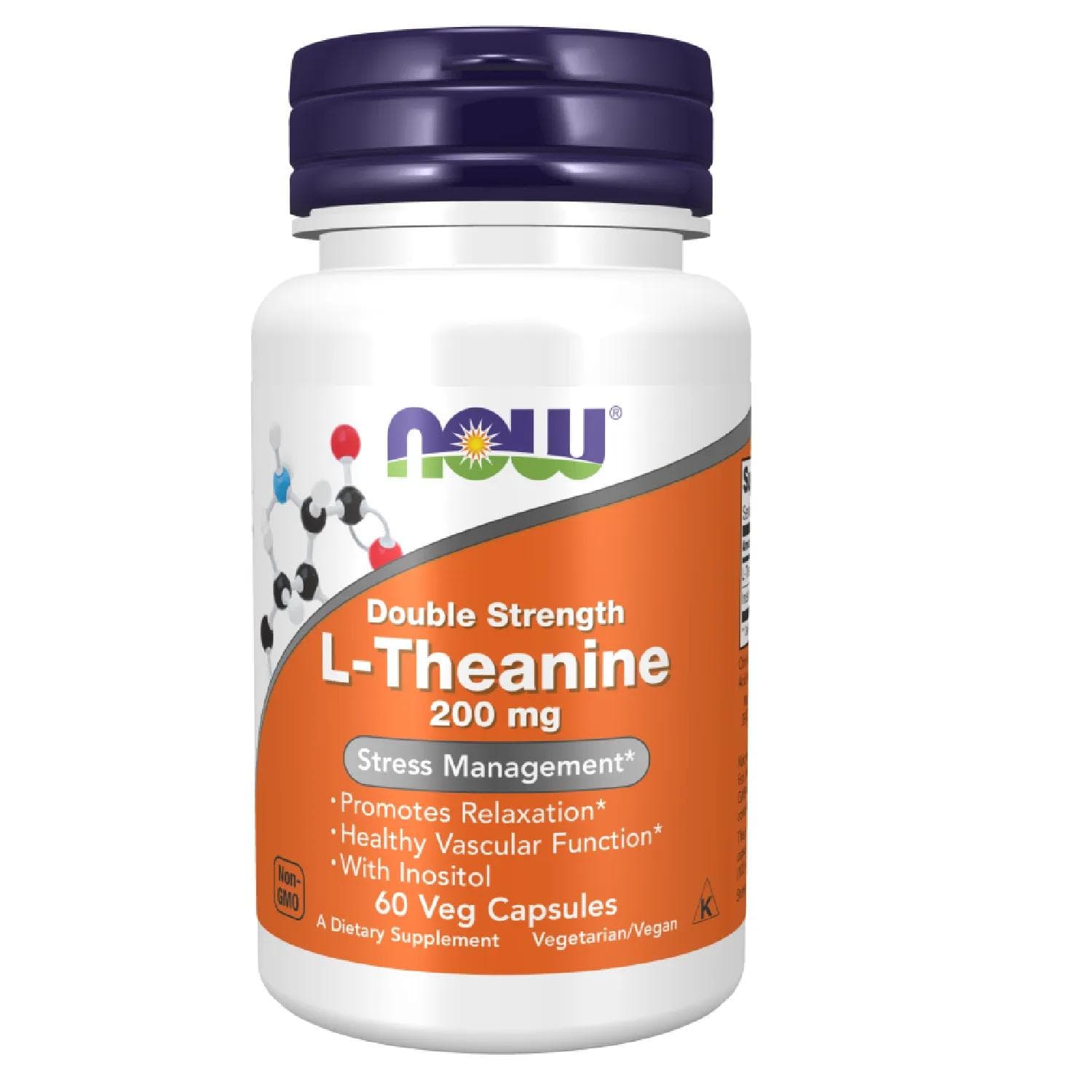
NOW Foods Supplements
Theanine promotes relaxation while maintaining alertness and promotes healthy cognitive function. Theanine may also support healthy vascular function through this relaxing effect.
View Product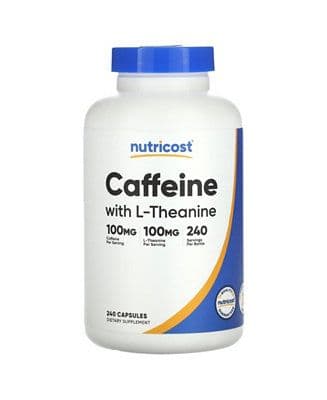
nutricost
Caffeine with L-Theanine is a high-quality dietary supplement that combines the powerful duo of caffeine and L-theanine. This unique blend provides you with a convenient and effective way to enhance your daily routine.
View Product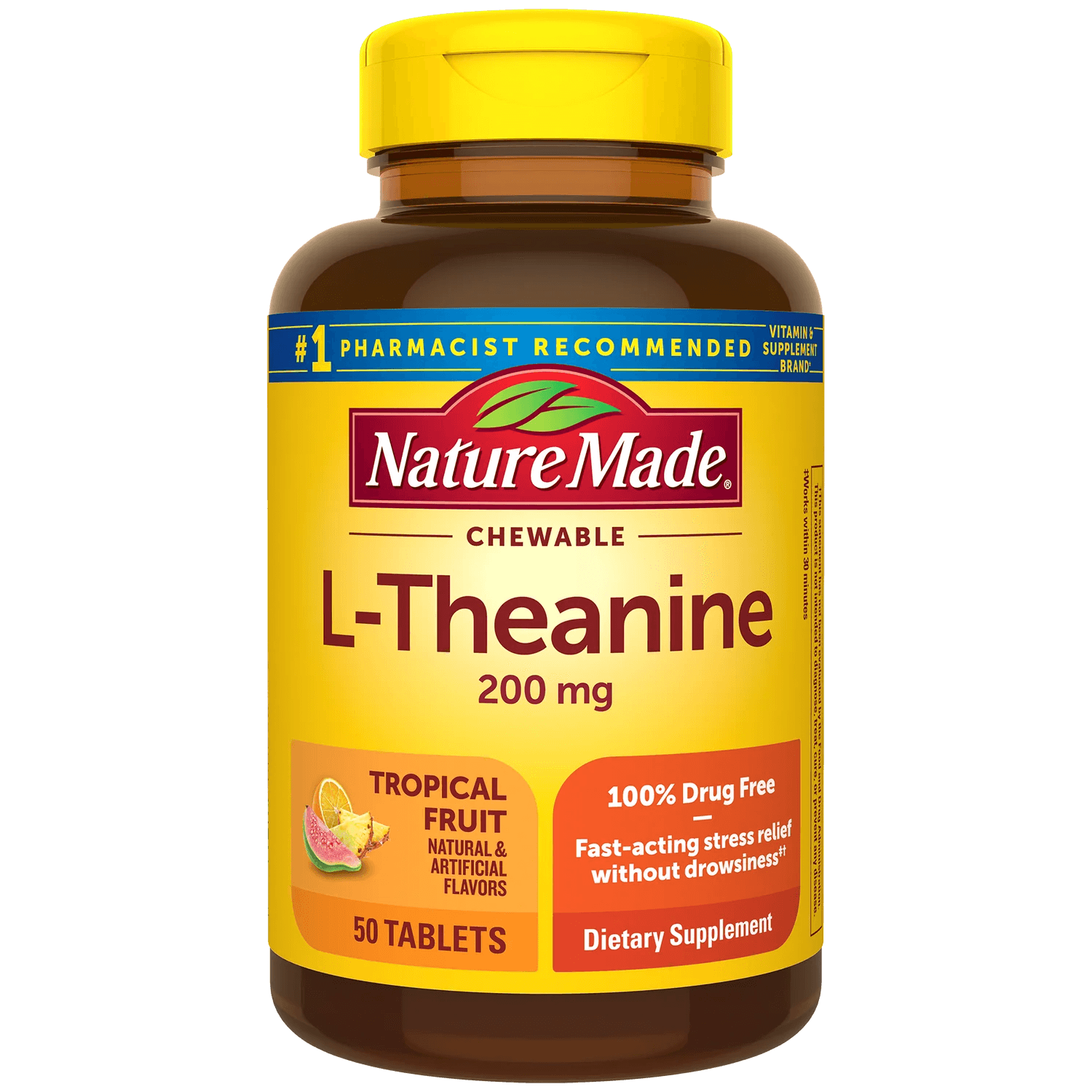
NatureMade
These L Theanine chewables come in a delicious tropical fruit artificial and natural flavor and have no color added, no dairy, and are gluten free, 100% drug free, and suitable for vegetarians.
View ProductSome links are affiliate links. We may earn a commission at no extra cost to you.
Sources
- 1.Acute effects of tea constituents L-theanine, caffeine, and epigallocatechin gallate on cognitive function and mood: a systematic review and meta-analysis — Camfield DA, Stough C, Farrimond J, Scholey AB, Nutrition Reviews, 2014
- 2. A Randomized, Triple-Blind, Placebo-Controlled, Crossover Study to Investigate the Efficacy of a Single Dose of AlphaWave® L-Theanine on Stress in a Healthy Adult Population — Evans M, McDonald AC, Xiong L, Crowley DC, Guthrie N, Neurology and Therapy, 2021
- 3.Pharmacology of caffeine and its effects on the human body — Vundrala Sumedha Reddy, S. Shiva, Srinidhi Manikantan, Seeram Ramakrishna, European Journal of Medicinal Chemistry Reports, 2024
- 4.Understanding the Stress Response — Harvard Health Publishing
- 5.Effects of L-theanine or caffeine intake on changes in blood pressure under physical and psychological stresses — Yoto A, Motoki M, Murao S, Yokogoshi H, Journal of Physiological Anthropology, 2012
- 6.Time for tea: mood, blood pressure and cognitive performance effects of caffeine and theanine administered alone and together — Rogers PJ, Smith JE, Heatherley SV, Pleydell-Pearce CW, Psychopharmacology, 2008
- 7.Theanine maintains sleep quality in healthy young women by suppressing the increase in caffeine-induced wakefulness after sleep onset — Baba Y, Takihara T, Okamura N, Food & Function, 2023
- 8.The combined effects of L-theanine and caffeine on cognitive performance and mood — Owen GN, Parnell H, De Bruin EA, Rycroft JA, Nutritional Neuroscience, 2008
- 9. L-theanine improves neurophysiological measures of attention in a dose-dependent manner: a double-blind, placebo-controlled, crossover study — Dassanayake TL, Kahathuduwa CN, Weerasinghe VS, Nutritional Neuroscience, 2022
- 10.L-theanine and caffeine improve target-specific attention to visual stimuli by decreasing mind wandering: a human functional magnetic resonance imaging study — Kahathuduwa CN, Dhanasekara CS, Chin SH, Davis T, Weerasinghe VS, Dassanayake TL, Binks M, Nutrition Research, 2018
- 11.Acute effects of theanine, caffeine and theanine-caffeine combination on attention — Kahathuduwa CN, Dassanayake TL, Amarakoon AMT, Weerasinghe VS, Nutritional Neuroscience, 2017
- 12. Effects of L-theanine Administration on Stress-Related Symptoms and Cognitive Functions in Healthy Adults: A Randomized Controlled Trial — Hidese S, Ogawa S, Ota M, Ishida I, Yasukawa Z, Ozeki M, Kunugi H, Nutrients, 2019
- 13. A double-blind, placebo-controlled study evaluating the effects of caffeine and L-theanine both alone and in combination on cerebral blood flow, cognition and mood — Dodd FL, Kennedy DO, Riby LM, Haskell-Ramsay CF, Psychopharmacology, 2015
- 14. L-Theanine reduces psychological and physiological stress responses — Kimura K, Ozeki M, Juneja LR, Ohira H, Biological Psychology, 2007
- 15.Caffeine — Better Health Channel (Victoria State Government)
- 16.Coffee Jitters? Grab a Banana — Baylor Scott & White Health