Dialectical Behavior Therapy (DBT): Evidence-Based Uses, Effectiveness and Benefits, and Who It Helps
Dialectical Behavior Therapy (DBT) is an evidence-based psychotherapy that helps people manage intense emotions andreduce self-destructive behaviors. It is used for borderline personality disorder, depression, and emotional dysregulation.

What is Dialectical Behavior Therapy (DBT)?
Dialectical Behavior Therapy (DBT) is an evidence-based form of psychotherapy designed to help people better regulate their emotions, tolerate distress, improve interpersonal relationships, and develop healthier coping strategies. It was originally developed for people experiencing chronic suicidal thoughts and borderline personality disorder (BPD), but today it is used to treat a much broader range of mental health conditions.[1][2]
Unlike traditional talk therapy, DBT focuses heavily on teaching practical skills that patients can apply in their everyday lives. Rather than simply discussing thoughts and emotions, therapy sessions involve learning techniques that help people respond to stressful situations in healthier ways. DBT also emphasizes mindfulness, encouraging individuals to become more aware of their thoughts and feelings without immediately reacting to them.[1][3]
The word dialectical refers to balancing two seemingly opposite ideas at the same time: accepting yourself as you are while also working toward meaningful change. This balance between acceptance and change is one of the defining characteristics of DBT and distinguishes it from many other forms of psychotherapy.[2]
Who Created DBT?
Dialectical Behavior Therapy was developed by psychologist Dr. Marsha M. Linehan during the late 1980s. While treating patients with chronic suicidality and borderline personality disorder, Linehan recognized that many existing therapies were not producing meaningful long-term improvements.[2]
She combined traditional cognitive behavioral therapy techniques with concepts drawn from mindfulness, acceptance, behavioral psychology, and Zen practices. The result was a structured treatment approach that helped patients develop practical emotional regulation skills while simultaneously validating their experiences.[2][3]
Since its development, DBT has become one of the most extensively researched psychotherapies for borderline personality disorder and has since been adapted for numerous other psychiatric conditions.
How Does DBT Work?
DBT is a structured therapy that teaches practical behavioral skills rather than relying solely on discussion. Patients gradually learn how to recognize emotional triggers, tolerate distress without acting impulsively, and replace unhealthy behaviors with more effective coping strategies.[1][3]
Standard DBT generally consists of four core skill modules:
- Mindfulness
- Distress tolerance
- Emotion regulation
- Interpersonal effectiveness
Mindfulness teaches individuals to observe their thoughts and emotions without judgment. Distress tolerance focuses on surviving emotional crises without making the situation worse. Emotion regulation helps people identify, understand, and manage intense emotions, while interpersonal effectiveness develops healthier communication, relationship boundaries, and conflict resolution skills.[1][3]
Many comprehensive DBT programs combine individual therapy, group skills training, between-session coaching, and therapist consultation teams to reinforce learning and improve long-term outcomes.
Who is DBT Aimed For?
Although DBT was originally created for individuals with borderline personality disorder (BPD), its use has expanded considerably over the past several decades.[2]
People with BPD often experience intense mood swings, unstable relationships, impulsive behaviors, and chronic fears of abandonment. Research also shows that individuals with BPD have significantly elevated rates of suicide attempts during their lifetime, highlighting the importance of effective treatment.[4][5]
Today, DBT is commonly used for:
- Borderline personality disorder
- Chronic suicidal thoughts
- Self-harming behaviors
- Post-traumatic stress disorder (PTSD)
- Depression
- Anxiety disorders
- Eating disorders
- Substance use disorders
- Emotional dysregulation
Therapists may also adapt DBT techniques for adolescents, families, and individuals struggling with severe emotional reactivity.
How Effective is DBT?
DBT is considered one of the strongest evidence-based psychotherapies for borderline personality disorder.
A 2024 systematic review examining 18 randomized controlled trials involving 1,755 participants found that DBT consistently reduced suicidal behaviors, self-harm, impulsivity, psychiatric symptoms, depressive symptoms, and hospitalization rates in patients with BPD.[6]
Beyond reducing crisis behaviors, DBT has also been shown to improve treatment adherence, emotional regulation, and overall psychological functioning. Many of these improvements persisted for up to two years following treatment.[6]
Research has also demonstrated that DBT can benefit conditions beyond BPD. Adapted versions of DBT have shown promising results in treating PTSD, anxiety disorders, and emotional dysregulation across multiple patient populations.[9][10]
Although individual results vary, the current body of evidence supports DBT as one of the most effective treatments available for individuals experiencing severe emotional instability.
What are the Benefits of DBT?
DBT offers both immediate coping strategies and long-term psychological improvements.
Common benefits include:
- Improved emotional regulation
- Reduced suicidal thoughts and self-harming behaviors
- Better distress tolerance during difficult situations
- Stronger communication and relationship skills
- Increased self-awareness through mindfulness
- Reduced impulsive decision-making
- Improved self-esteem and confidence
- Better ability to manage anxiety and depression
- Fewer psychiatric hospitalizations
- Improved overall quality of life
Many patients report that DBT provides practical tools they continue using long after therapy has ended, making it valuable for long-term emotional wellbeing.
How Long Until You See Results from DBT?
The timeline for improvement varies depending on the individual, the condition being treated, and participation in therapy.
Some people begin noticing improvements within the first several weeks as they learn basic coping skills. For many individuals, meaningful changes become more noticeable after approximately three to six months of consistent therapy and skills practice.[7]
Traditional outpatient DBT programs often last between six and twelve months, although treatment duration may be longer for individuals with more complex presentations.
Emerging research also suggests that shorter DBT programs may still provide substantial benefits. A 2024 study comparing 8-week and 12-week inpatient DBT programs found significant improvements in both groups, with no meaningful differences in symptom reduction between the two treatment lengths.[8] These findings suggest that shorter DBT interventions may improve accessibility while maintaining clinical effectiveness for some patients.
Overall, the greatest improvements are typically seen when patients actively practice DBT skills outside of therapy sessions and remain engaged throughout treatment.
Final Thoughts
Dialectical Behavior Therapy has transformed the treatment of borderline personality disorder and is now recognized as one of the most effective psychotherapies for emotional dysregulation. By combining acceptance, mindfulness, and evidence-based behavioral techniques, DBT equips people with practical tools to manage overwhelming emotions, improve relationships, and build healthier coping strategies.
While originally developed for BPD, growing research supports its effectiveness across several mental health conditions, making DBT an increasingly valuable treatment option for both clinicians and patients seeking long-term emotional stability and improved quality of life.
Frequently asked questions
- Is DBT only used for borderline personality disorder?
No. Although DBT was originally developed for borderline personality disorder (BPD), it is now used to treat several other mental health conditions. Research supports its use for post-traumatic stress disorder (PTSD), depression, anxiety disorders, eating disorders, substance use disorders, and chronic self-harming behaviors. Recent meta-analyses have shown that DBT-based treatments can significantly reduce PTSD symptoms, depressive symptoms, and emotional dysregulation.[9]
- What makes DBT different from other therapies?
DBT differs from many traditional therapies because it combines acceptance with behavior change. Instead of focusing only on changing thoughts, DBT teaches practical life skills such as mindfulness, emotion regulation, distress tolerance, and interpersonal effectiveness. Patients learn how to manage emotions while also accepting difficult experiences without judgment.[1][3]
- What happens in a DBT session?
A typical DBT program includes individual therapy sessions alongside group skills training. During therapy, patients discuss recent challenges, review situations where emotions became overwhelming, and learn practical techniques to respond more effectively. Homework assignments and practicing skills between sessions are often important parts of treatment.
- Do you have to do group therapy in DBT?
Not always. Standard comprehensive DBT usually combines individual therapy with group skills training because research suggests this provides the greatest benefit. However, some therapists offer individual-only DBT or adapt the treatment depending on the person's needs, availability, and diagnosis.
- How long does DBT take to work?
Some people notice improvements within several weeks as they begin using DBT skills. More significant changes commonly occur after three to six months of consistent participation. Standard outpatient DBT programs often last between six and twelve months, although research suggests some shorter programs may also produce meaningful improvements.[7][8]
- Is DBT hard to do?
DBT can be challenging because it requires regular attendance, active participation, and practicing skills outside therapy sessions. However, many people find the structured approach easier to follow than less structured forms of psychotherapy because it provides practical tools for everyday situations.
- Does DBT cure mental health conditions?
DBT is not considered a cure. Instead, it helps people develop lifelong coping skills that reduce symptoms, improve emotional regulation, and decrease harmful behaviors. Many individuals continue benefiting from the techniques they learn long after formal therapy ends.
- Is DBT evidence-based?
Yes. DBT is one of the most extensively researched psychotherapies available for borderline personality disorder. Numerous randomized controlled trials and systematic reviews have demonstrated its effectiveness in reducing suicidal behaviors, self-harm, emotional dysregulation, depression, impulsivity, and psychiatric hospitalizations.[6]
- Can DBT help with anxiety?
Yes. While cognitive behavioral therapy (CBT) remains the primary treatment for many anxiety disorders, research has shown that DBT can also reduce anxiety symptoms, particularly in people who experience intense emotional dysregulation. Studies comparing DBT and CBT for generalized anxiety disorder found both therapies significantly reduced anxiety severity over time.[10]
- Can DBT help with PTSD?
Yes. Adapted forms of DBT have shown promising results for individuals with PTSD, especially when symptoms include emotional dysregulation or self-harming behaviors. A 2024 systematic review found that DBT-based treatments significantly reduced PTSD symptoms and depression while improving emotional functioning.[9]
- What are the four main DBT skills?
The four core DBT skill modules are:
- Mindfulness
- Distress tolerance
- Emotion regulation
- Interpersonal effectiveness
Together, these skills help people manage emotions, navigate stressful situations, communicate more effectively, and improve relationships.
- Is DBT suitable for teenagers?
Yes. DBT has been adapted for adolescents experiencing emotional dysregulation, self-harm, suicidal thoughts, anxiety, depression, or behavioral difficulties. Family members are often involved in treatment to help reinforce DBT skills outside therapy.
- Can DBT be done online?
Yes. Many therapists and mental health clinics now offer DBT through secure video sessions. Online DBT programs often include individual therapy, virtual skills groups, and digital resources, allowing people to access treatment from home while following the same core principles as in-person therapy.
Learn more about Dialectical Behavior Therapy (DBT)
Learn more about Dialectical Behavior Therapy (DBT) through practical books and workbooks that teach core skills like mindfulness, emotion regulation, distress tolerance, and interpersonal effectiveness, and everyday
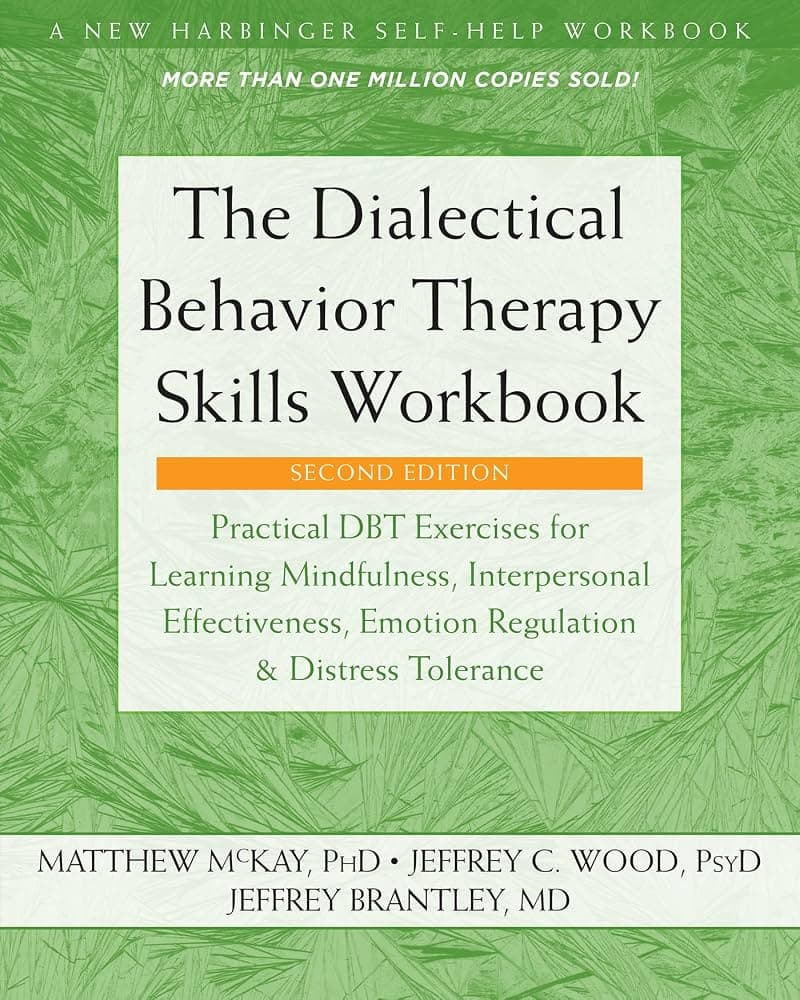
by Matthew McKay PhD & Jeffrey C. Wood PsyD & Jeffrey Brantley MD
Practical DBT workbook with exercises for mindfulness, emotion regulation, distress tolerance, and interpersonal skills—helping you turn therapy concepts into daily coping tools for real-life emotional challenges.
View Product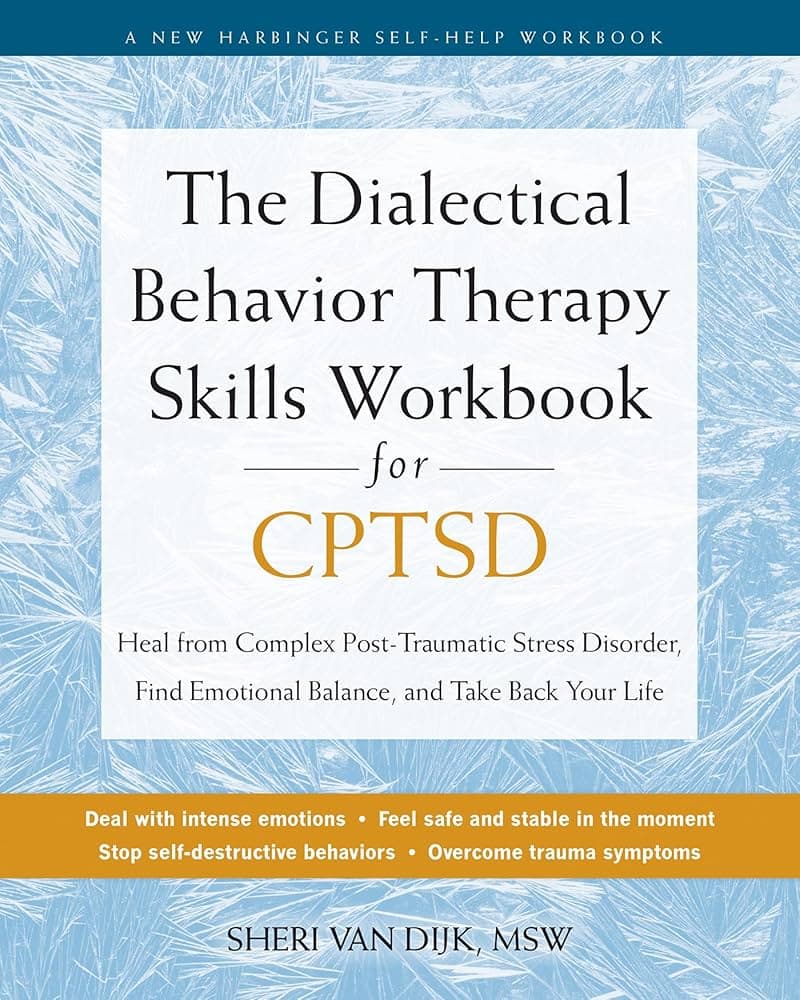
by Sheri Van Dijk MSW
DBT-based workbook for CPTSD with guided exercises to manage trauma symptoms, regulate emotions, reduce overwhelm, and build healthier coping skills to support emotional stability and recovery.
View Product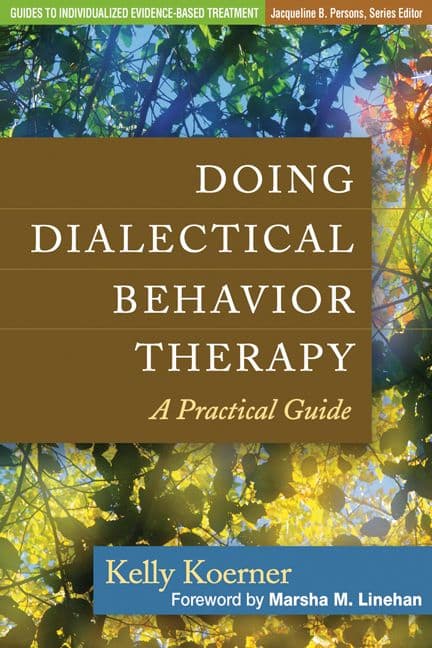
by Kelly Koerner & Marsha M. Linehan
Practical DBT guide for therapists and clinicians offering step-by-step methods to apply evidence-based treatment, tailor interventions, and build effective skills for emotion regulation and behavioral change.
View ProductSome links are affiliate links. We may earn a commission at no extra cost to you.
Sources
- 1.Dialectical Behavior Therapy: What Is It and Who Can It Help? — Harvard Health Publishing, Harvard Health Publishing, 2024
- 2.Marsha M. Linehan — Wikipedia Contributors, Wikipedia, 2025
- 3.A Revolutionary Approach to Treating Those Haunted by the Past — Benedict Carey, The New York Times, 2011
- 4.Borderline Personality Disorder in the Light of Developmental Psychopathology — Mezei J, Juhasz A, Kilencz T, Vizin G, Neuropsychopharmacologia Hungarica, 2020
- 5.Borderline Personality Disorder: A General Overview — Nok Wun, Advances in Social Science, Education and Humanities Research, 2022
- 6.Efficacy of Dialectical Behavior Therapy in the Treatment of Borderline Personality Disorder: A Systematic Review of Randomized Controlled Trials — Hernandez-Bustamante M, Cjuno J, Hernández RM, Ponce-Meza JC, Iranian Journal of Psychiatry, 2024
- 7.How Long Does It Take for a DBT Program to Work? — Boomerang Counselling Centre, Boomerang Counselling Centre, 2024
- 8.Comparison of 8-vs-12 Weeks, Adapted Dialectical Behavioral Therapy (DBT) for Borderline Personality Disorder in Routine Psychiatric Inpatient Treatment—A Naturalistic Study — Kujovic M, Benz D, Riesbeck M, et al., Scientific Reports, 2024
- 9.A Systematic Review and Meta-analysis on the Efficacy of Dialectical Behavior Therapy Variants for the Treatment of Post-Traumatic Stress Disorder — Prillinger K, Goreis A, Macura S, Hajek Gross C, Lozar A, Fanninger S, Mayer A, Oppenauer C, Plener PL, Kothgassner OD, European Journal of Psychotraumatology, 2024
- 10.Study of the Effects of Cognitive Behavioral Therapy Versus Dialectical Behavior Therapy on Executive Function and Reduction of Symptoms in Generalized Anxiety Disorder — Afshari B, Jafarian Dehkordi F, Asgharnejad Farid AA, Aramfar B, Balagabri Z, Mohebi M, Mardi N, Amiri P, Trends in Psychiatry and Psychotherapy, 2022
Related articles

EMDR Therapy: How It Works, Benefits, Effectiveness, Risks and What to Expect
Jun 23, 2026 · 13 min read

Adverse Childhood Experiences (ACEs): Prevalence, Long-Term Outcomes, and Evidence-Based Interventions
Jun 26, 2026 · 8 min read

Internal Family Systems (IFS) Therapy: A Complete Evidence-Based Guide to Parts Work, Healing, and Clinical Applications
Jun 27, 2026 · 12 min read